

Process Flow
Product process
Environmental Protection
Shrimp shell powder process
Introduction to Crayfish Powder
Shrimp shell powder refers to one or more kinds of shrimp as raw materials, which are processed through high-temperature cooking, drying, crushing, cooling, and other processes; now, with the rise of freshwater crayfish farming, freshwater crayfish powder is also open. Shrimp powder market. Freshwater crayfish shrimp and soup shrimp are the main aquatic products processed and exported in China. Currently, the majority of Chinese enterprises that process and export crayfish and seawater shrimp consider the large number of shrimp heads and shells that are produced after cooking and peeling shrimps as waste materials. Shrimp head shell waste contains 20%~30% organic substances such as animal protein, 30%~40% calcium, and other inorganic substances; shrimp shells contain 20%~30% chitin; and 4%~8% shrimp green vegetarian. Crayfish leftovers are shrimp heads and shrimp shells, which account for 70% to 80% of shrimp body weight and are rich in amino acids, peptides, proteins, and other nutrients. Shrimp shells contain about 20% chitin and 4% to 8% astaxanthin.
Domestic market trends
In 2019, the total output of crayfish aquaculture in China reached 2.0896 million tons, while the total aquaculture area reached 19.29 million mu. This represents an increase of 27.52% and 14.80%, respectively, compared to 2018. However, the rate of growth has declined. According to the breeding mode, crayfish paddy farming accounts for the largest proportion, with an output of 1.7725 million tons and an aquaculture area of 16.58 million mu, accounting for 84.82% and 85.96% of the total output and total area of crayfish farming, respectively, accounting for the national total rice and fishery comprehensive planting and breeding. The yield amounts to 60.46%, while the total area accounts for 47.71%. From a national perspective, the five traditional crayfish farming provinces continue to grow, while Zhejiang and other provinces with a late start have also begun to accelerate their development. The crab farming industry's overall rapid growth has not diminished.
Introduction to the production process
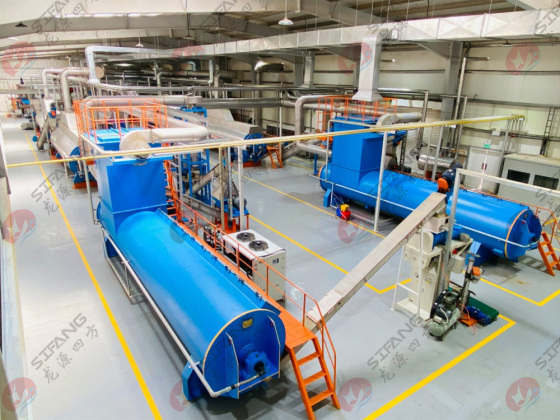
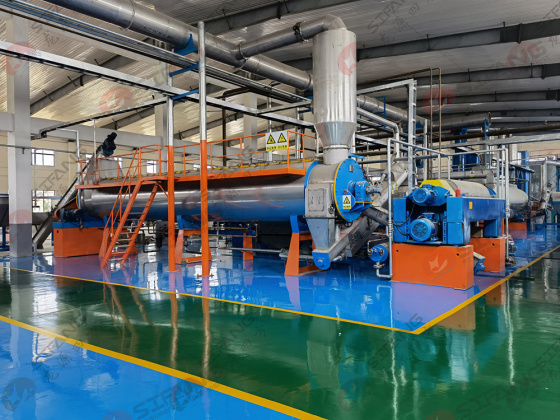
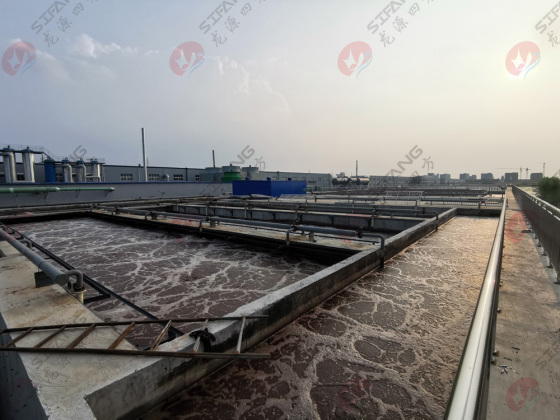
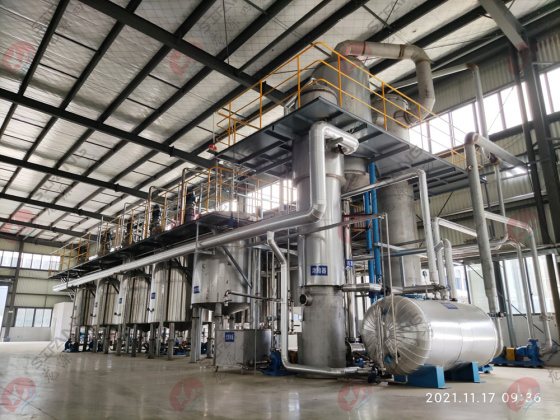
Shrimp shell powder is produced by a wet process. The raw materials first pass through a closed iron removal chute to remove possible iron blocks, iron sheets, and other garbage, and then enter the cooking machine through a screw conveyor. In the cooking machine, the raw materials are cooked and sterilized by high-temperature steam and then sent to the press for separation of the solid and oil-water mixture. The dryer receives the pressed cake, while the vibrating screen filters the juice. The filtered juice then proceeds to the exhaust gas concentration system. To evaporate water from the juice, the dryer primarily uses the rising film concentration of waste gas. Together, the concentrated liquid and the press-pressed cake enter the dryer. At the same time, the solids generated during the vibrating screen's filtration also enter the dryer. The pushing device on the main shaft continuously pushes the material into the dryer, baking it in the steam. The constant stirring of the main shaft evaporates a significant amount of water vapor, which the induced draft fan continuously draws out. Upon drying the moisture to approximately 8%-10%, the dryer discharges the material to the standard level. At this time, the temperature of the shrimp powder is high, and there are many large particles. We first remove the iron substances from the powder using an iron removal bucket, then cool it down initially using an air-cooled auger. Finally, we use a powder sifter to remove any large objects or garbage present. At this point, the shrimp shell powder is essentially clean, but it lacks sufficient thickness and exhibits irregularities. It is necessary to send the shrimp shell powder to the pulverizer to pulverize it into a finer and more uniform powder, thus forming a more ideal shrimp shell powder. Finally, a cooler cools the powder, after which it is directly packaged into the warehouse. For raw materials containing high shrimp oil, we also provide oil filter equipment, mainly through horizontal centrifuges and disc centrifuges. The juice produced by the press is extracted for oil and then sent for concentration. The flour is less oily, and the shrimp oil also yields more profit. In addition, after the waste gas generated by the dryer and other equipment is used in the rising film concentration of the waste gas, it enters the tubular condenser to condense all the water vapor into water, and the condensed water enters the waste water treatment center to remove the waste gas with moisture and then pass through the purification tower. The exhaust gas is thoroughly purified, and then the exhaust gas is discharged up to the standard.
Flow chart of crayfish powder production line

Production process photos
|
crayfish production stage (1) |
crayfish production stage (2) |
crayfish production stage (3) |
|
crayfish production stage(4) |
crayfish production stage (5) |
crayfish production stage (6) |
|
crayfish production stage (7) |



Products